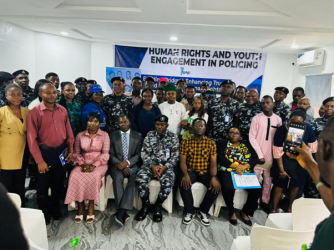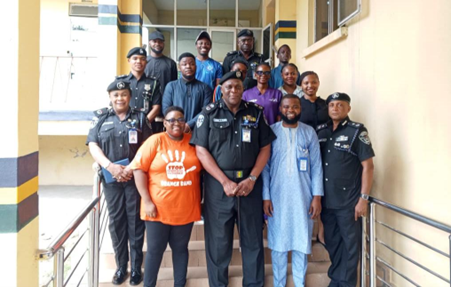
On Tuesday, March 24th, 2026, We the People under the aegis of the #IncludeNaija project, conducted a high-level advocacy visit to the Cross River State Commissioner of Police.
Historically, the relationship between Nigerian youth and law enforcement has been characterized by deep-seated distrust, systemic profiling, and mutual suspicion—factors that have frequently positioned the Police as an adversary rather than a protector. In a strategic effort to bridge this widening gap in expectations and institutionalize a culture of human rights, WTP led a delegation of student leaders and youth-led organizations to the State Command Headquarters in Calabar. The delegation was received by Commissioner of Police Rashid Afegbua, who granted an audience to discuss transformative reforms.
During the session, WTP presented a summary notes detailing previous Police-Youth Dialogue sessions held in Akpabuyo, Bakassi, and Calabar. Through these findings, WTP aims to formalize regular communication channels to mitigate friction and bolster community-based intelligence sharing.
Augustine Vicker Uka, Esq., WTP’s Project Officer noted that the project seeks to promote inclusive governance and safeguard fundamental rights. “While young people are receptive to the evolution of state policing,” Barr. Vicker observed, “they remain haunted by the spectre of victimization and arbitrary arrest. This trauma fuels the persistent conflict we see today.”
To provide a structured remedy, Barr. Vicker proposed the establishment of a Youth Reporting Platform featuring a dedicated toll-free line. This portal is proposed to offer a formal, credible alternative to “social media escalations,” which many youths currently utilize due to a lack of awareness regarding official police grievance channels.
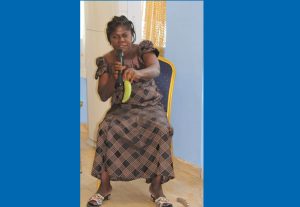
Supporting this call for inclusivity, Mr. Otei Joshua, Executive Director of the Hope Assured Foundation, highlighted the unique challenges faced by rural communities. He noted that administrative bottlenecks and an “information poverty” gap often prevent rural youth from reporting rights abuses to the appropriate authorities. Similarly, Ms. Yojorsam Stephen Okoi, leader of the University of Calabar Youth Friendly Hub, and Enor Ofem Osikpong, a student leader at the University of Cross River State both emphasized that the #IncludeNaija initiative serves as a vital bridge, provided the Police Command maintains its current momentum of support.
In his response, CP Afegbua, joined by ACP Adewalehinmi and other senior Police Officers, acknowledged the complexities of modern law enforcement. He underscored that the Police remains subject to rigorous oversight by the Police Service Commission Civil Society Organizations, and the media. Describing the youth as the “engine room of the nation,” the Commissioner pledged his full cooperation.
“The public’s perception of the Force is a direct reflection of our proximity to the people,” CP Afegbua remarked. To formalize the partnership, he directed the Police Public Relations Officer (PPRO) to collaborate with WTP in establishing a #IncludeNaija Toll-Free Reporting Channel. This dedicated line will serve as a verified channel for reporting both local crimes and instances of professional misconduct by officers.
The Command’s PPRO, ASP Sunday Eitokpah, further defended the institution’s transparency, citing the Police Complaints Unit as evidence of their commitment to accountability.
The engagement concluded with a shared pledge to foster a safer, more inclusive environment—leveraging technology and active collaboration to ensure that the rights of every young Nigerian are not just recognized, but rigorously protected.