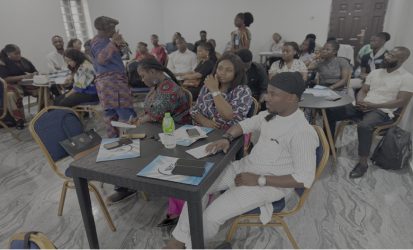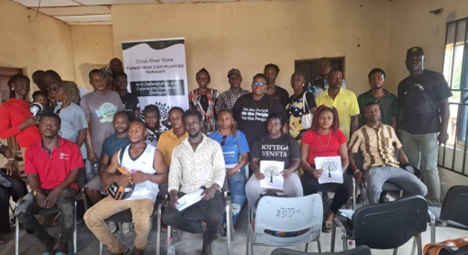
In March 2026, We the People held a series of community-led dialogues and step-down training sessions in Okuni and Akaraba communities in Cross River State, as part of ongoing efforts to confront rising deforestation and strengthen grassroots resilience. These engagements were shaped by growing concerns within forest host communities about the alarming rate of forest loss driven largely by unchecked logging activities and the increasing infiltration of forest spaces by external actors. Community members expressed worry over the rapid degradation of their environment, the disruption of local livelihoods, and the long-term ecological consequences, including biodiversity loss, soil erosion, and the weakening of natural climate buffers. Against this backdrop, the dialogues served as a platform not only to demand urgent government intervention but also to build a unified and coordinated community response through the Forest Host Communities Network to protect their forest heritage. Across both communities, the sessions brought together traditional leaders, youth representatives, women and other stakeholders in highly participatory discussions that emphasized collective responsibility and local ownership of forest protection efforts.
In Okuni Community, His Royal Highness Okim John Eju Osadim, alongside other chiefs and elders, acknowledged the severity of the threat and welcomed the dialogue as timely, aligning with their internal efforts to curb timber exploitation. The session, attended by 40 participants, created space for open reflection on the drivers of deforestation, including the influence of timber unions and weak enforcement of regulations, while also fostering commitment to action. Twenty-two participants volunteered to join the Forest Host Communities Network and were formally inaugurated, signaling a strong willingness among community members to take ownership of advocacy and sensitization efforts within and beyond their locality.
A similar sense of urgency and commitment was evident in Akaraba, where the session, hosted by the community leadership, was conducted in an inclusive and interactive manner using indigenous language to ensure broad participation. The dialogue built on existing community structures and resulted in the formal acceptance of the Forest Host Communities Network, alongside the establishment of a seven-member coordinating committee to drive local activities. The process of engagement in both communities went beyond dialogue to include knowledge-sharing on strategic advocacy, distribution of campaign materials, and documentation of forest conditions through photographs and video footage to support ongoing campaigns. These elements contributed to building the capacity of community members to understand the broader implications of deforestation and to engage more effectively with policy processes and accountability mechanisms.
Overall, the combined sessions in Okuni and Akaraba was geared to strengthen alliances with traditional institutions and reinforcing a shared commitment to forest conservation and community resilience. The engagements marked a critical step in consolidating a community-driven movement against deforestation in Cross River State and demonstrating the power of collective action in confronting environmental challenges.