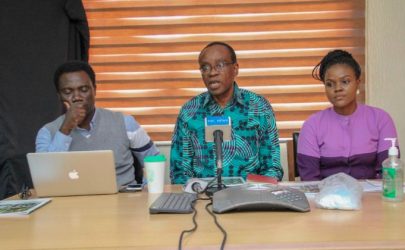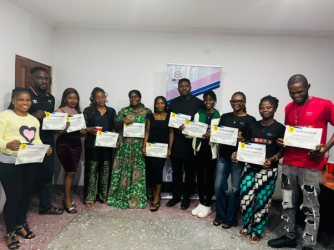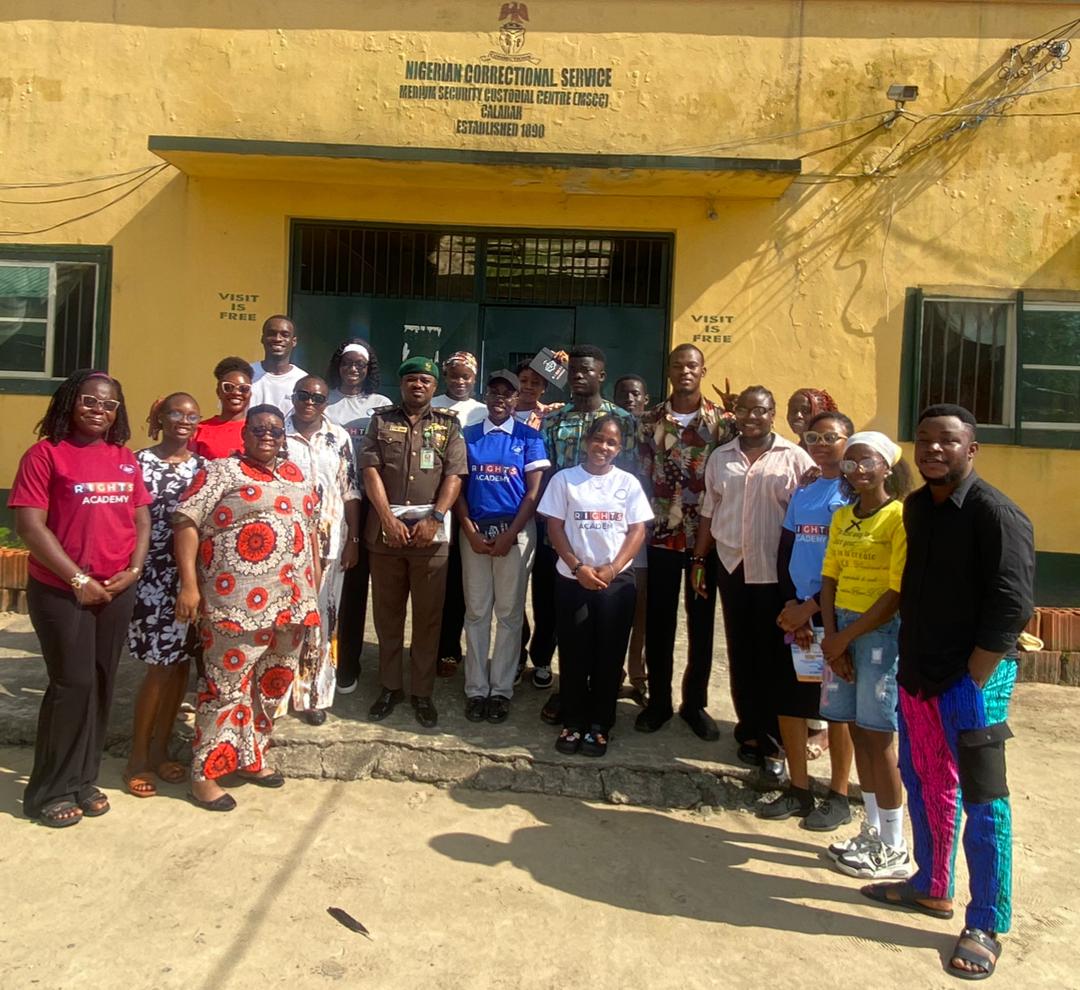
As part of its commitment to providing practical human rights education, Rights Academy on 31st August 2026 organized an educational excursion for its fifth cohort to the Afokang Correctional Centre in Calabar, Cross River State. The visit gave the scholars an opportunity to move beyond classroom discussions and experience first hand the realities of life within a correctional facility. The scholars were received by officials of the correctional centre and taken on a guided tour of different sections of the facility, including the male and female units, the clinic, and the rehabilitation hall. The visit gave them a clearer understanding of how the correctional system operates and the challenges faced by both inmates and correctional personnel.
One of the major issues that stood out during the visit was overcrowding. The scholars were informed that the facility was built to accommodate about 450 inmates but currently houses 784. They also learned that a large number of the inmates are awaiting trial, with 531 people, including 520 males and 11 females, still awaiting trial.
Speaking with the scholars, the Chief Superintendent of Prisons, CSP A. E. Edet, attributed the overcrowding at the facility largely to the slow pace of convictions and the discharge of cases within the judiciary and the Department of Public Prosecutions. According to him, delays in the administration of justice directly contribute to the growing number of inmates in the facility. In his words, “these departments are responsible for this overcrowding because they are the ones responsible for convictions and discharge, but because of how they work, that is why it is this way.” The experience helped the scholars understand how delays within the justice system can affect people in correctional facilities. They learned that the challenges within the correctional centre are often connected to wider problems within the criminal justice system and the work of institutions responsible for arrest, prosecution, conviction, and discharge.
The scholars also visited the female correctional unit, where they learned about the specific needs of women in custody. They were informed that menstrual materials are provided through government intervention and support from non-governmental organizations. This highlighted the importance of dignity, healthcare, and proper welfare for women in correctional facilities.
At the clinic, the scholars learned about the healthcare services available to inmates. However, they were informed of challenges including shortages of drugs, wound treatment materials, hygiene supplies, and toiletries.
For many of the scholars, the visit brought human rights lessons to life. Seeing the correctional environment first hand gave them a deeper understanding of issues such as dignity, access to justice, fair trial, healthcare, rehabilitation, and the rights of persons deprived of their liberty. It made them realize that human rights ought not be selective, and that even inmates are entitled to basic humane treatment and decency.
The excursion also encouraged the scholars to ask important questions about the justice system and its impact on vulnerable people. It reinforced the need for empathy, accountability, and practical action in the promotion and protection of human rights.
Overall, the visit to Afokang Correctional Centre was a valuable learning experience for the Rights Academy scholars. It provided them with an opportunity to connect what they have learned in the classroom with the lived realities of people within the correctional system and strengthened their understanding of the importance of justice, dignity, and human rights for all