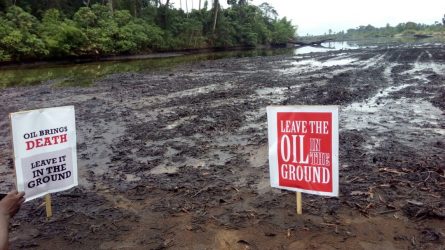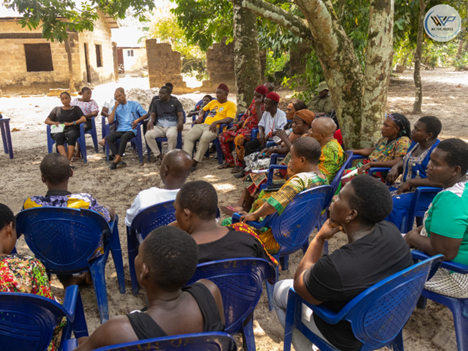
On March 5, 2026, We the People, in partnership with the People’s Health Collective, held a community dialogue in Egi Community, Ogba/Egbema/Ndoni Local Government Area of Rivers State to interrogate and investigate the health impacts of crude oil extraction. The dialogue aimed to broaden the scope of accountability for oil companies operating in the Niger Delta. While most advocacy around oil extraction has focused on environmental pollution, participants emphasized that equal attention must be given to the health implications of oil and gas operations on host communities. Egi community hosts gas assets operated by TotalEnergies, where open gas flaring has long been a concern for residents. Community testimonies during the meeting reinforced fears that emissions from oil and gas activities are contributing to worsening health conditions in the area. The meeting was attended by community women, men, youth, and traditional leaders.
Grace Appolos, Programs Manager at We the People, opened the dialogue, reflecting on the decades of environmental injustices carried out by oil companies in the Niger Delta. She noted that contrary to the narratives often promoted by oil companies that crude oil extraction brings development to host communities, the reality experienced by many communities has been the opposite. According to her, communities have been left with polluted rivers, contaminated farmlands, and unsafe drinking water. Grace described the situation in the Niger Delta as a grave injustice, stressing that communities continue to eat food grown on polluted land and drink water from contaminated sources, exposing them to serious health risks. She added that the obvious accountability gap created by oil companies should not discourage communities from organizing and sustaining their demands for justice.
Community members then took the center stage, sharing detailed accounts of emerging and worsening health challenges in the community. Participants spoke about the increasing prevalence of skin diseases and rashes, particularly among school pupils. According to residents, these conditions were previously uncommon and have been difficult to treat with conventional medication. A midwife from the community also raised concerns about a growing rise in infant mortality rates despite mothers attending antenatal sessions during pregnancy. She noted that even when deliveries are successful, many newborns appear weak and weigh significantly lower than expected.
Residents further spoke about the rise in cases of high blood pressure, persistent headaches, and eco-anxiety linked to the deteriorating environmental conditions caused by toxic emissions from crude oil production. Community members also described worrying trends among children, including stunted growth and unexplained open sores. They noted that many adults aged forty (40) years and above now experience extreme exhaustion and declining health, while the community has also recorded frequent unusual deaths, sometimes preceded by symptoms resembling elephantiasis.
Other concerns raised include increasing cases of eye impairment, which residents say is now common even among young people in the community, as well as infertility among both men and women. Participants also noted that livestock reproduction has been affected, raising further concerns about the broader ecological and health impacts of oil and gas operations.
Community members expressed deep concern that many of these health challenges began or significantly worsened after the arrival of oil and gas activities in the area. The dialogue concluded with residents reaffirming their commitment to continue seeking justice and accountability for the environmental and health harms experienced by the community. Participants stressed that even as oil companies divest from assets in the Niger Delta, communities will remain steadfast in their demands for accountability and justice for present and future generations.