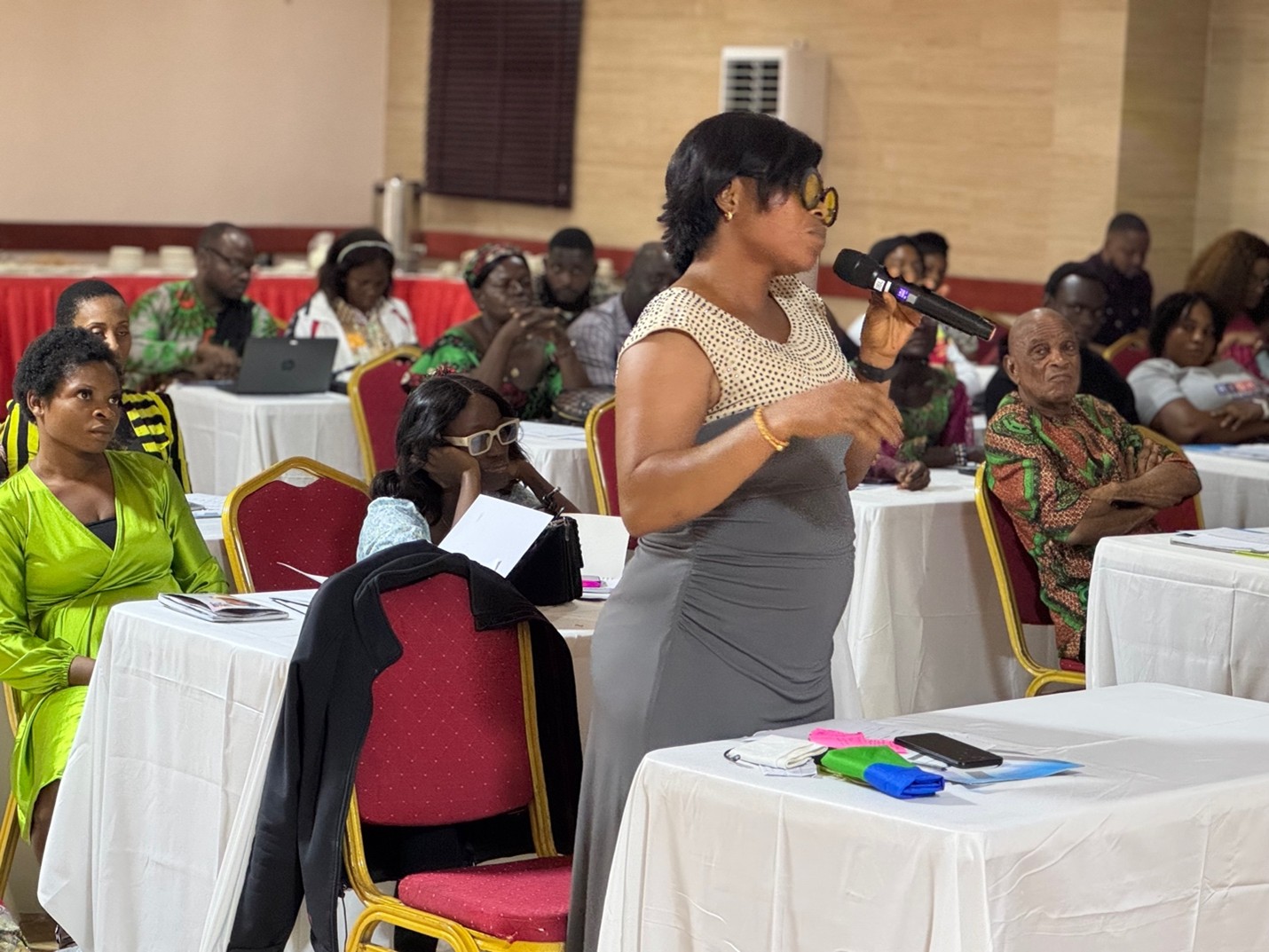
On Wednesday, June 11th, We the People hosted a community dialogue on the health impacts of hydrocarbon pollution in the Niger Delta which brought together medical doctors and other health professionals, scientists, civic society advocates, and hydrocarbon pollution survivors to discuss the toll of pollution on the human body and environment. The Niger Delta continues to face the brunt of oil extraction through widespread hydrocarbon pollution, with serious consequences for community health, agriculture, and livelihoods. According to Kebetkache’s 2024 study, over 80 blood samples collected in Otuabagi community all returned positive for hydrocarbons, a reminder of the region’s harmful exposure to negative health impacts of extractive activities.
In his opening remarks, Ken Henshaw, Executive Director of We the People emphasized that decades of oil extraction have trapped Niger Delta communities in “a cage of pollution.” He criticized the Nigerian government for showing zero concern for the health of the people, while profiting from oil operations and leaving community people to deal with the fallouts.
Resource persons led thematic discussions on the link between pollution and public health. Dr. Rhiannon Osborne from the People’s Health Collective (UK) facilitated an intersectional session on climate, pollution, and health, while Onyekachi Emmanuel of Media and Justice Initiative (MAJI) and Dr. Dasetima Altriade, medical doctor and Professor of Dermatology in the Department of Internal Medicine, Faculty of Clinical Sciences, College of Medical Sciences at the University of Port Harcourt, took a deep dive into the Niger Delta Health Quality Assessment Report and the impact of hydrocarbon soot, gas flaring and people’s health, respectively. In his intervention, Dr. Bieye Briggs, a public health advocate, criticized the federal government for neglecting the health impacts of hydrocarbon pollution in the Niger Delta, noting that its role as both regulator and beneficiary of oil activities has led to conflict of interest and inaction. He highlighted rising death rates and illnesses in affected communities as evidence of the need for a comprehensive health audit in the Niger Delta.
A selection of women from Otuabagi community who tested positive for hydrocarbons lamented their poor health and the deepening poverty they have been exposed to. “Even our farms can no longer feed us, we are getting sick, but cannot afford hospitals” they lamented.
Mr. Princewill Chukwure of Ibaa community in Rivers State recounted the years of neglect following Shell’s 2016 oil spill that poisoned his community’s water. “They replaced our poisoned well with another borehole. But tests still show hydrocarbons. My family has suffered a series of losses”. Chukwure explained that he has lost family members due to complications from drinking contaminated water over a long period of time. Another victim from the same community, Mr. Anele Umesie who was brought to the meeting in a wheelchair alleged that his current condition is linked to hydrocarbon pollution he is exposed to in his compound.
The event closed with a call to the Nigerian government to mandate all operating and divesting International Oil Companies (IOCs)– Shell, Agip-Eni, ExxonMobil, Total Energies, Chevron- to conduct an independent health audit of the Niger Delta and develop a blueprint for addressing the harms. Participants also committed to establishing a Niger Delta Peoples’ Health Collective—a platform to consolidate data, voices, and resistance against extractive health injustices in the region.