
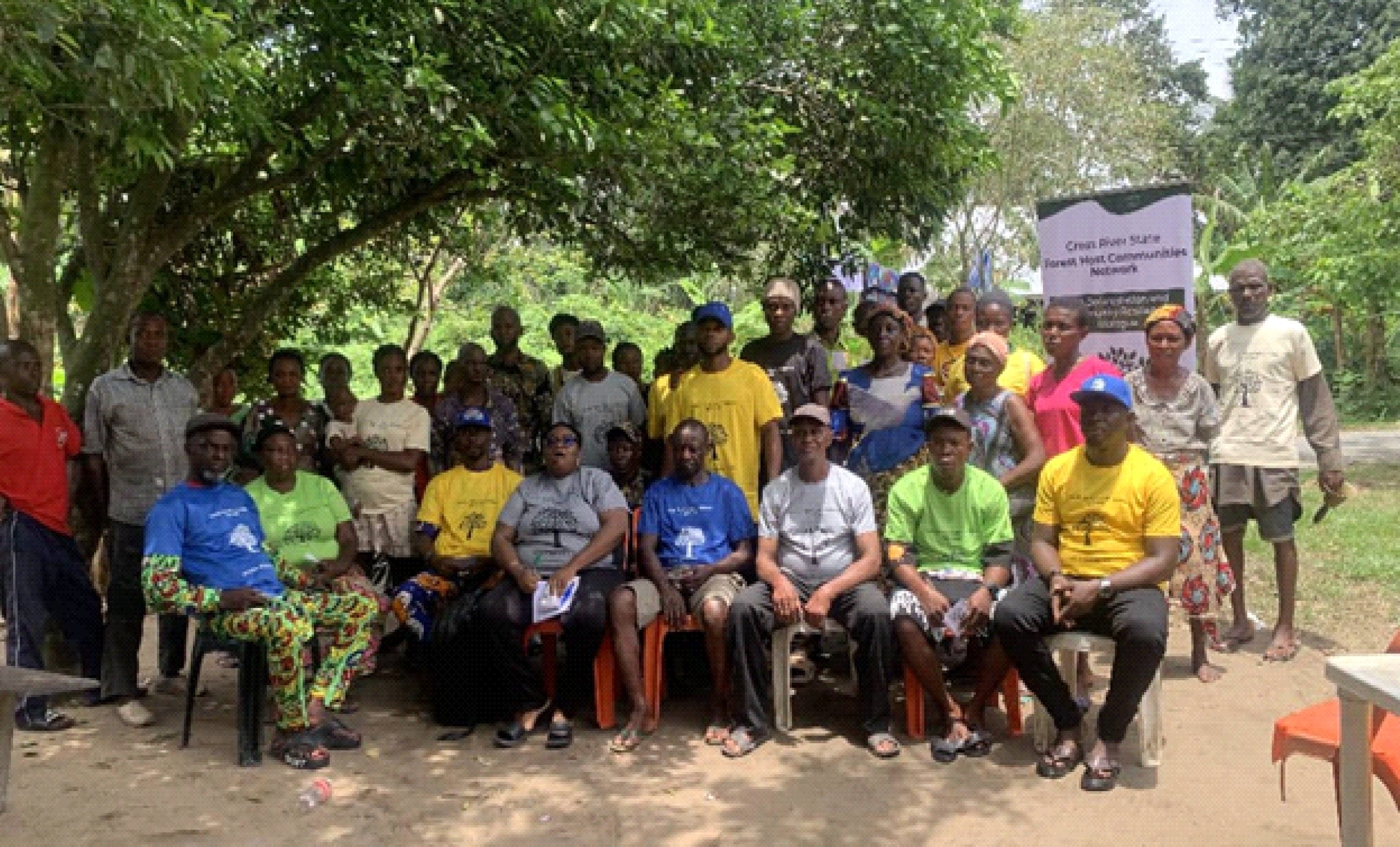
On April 30th, 2026, We the People convened a Community Resilience Dialogue on Anti-Deforestation in Ubambat Community, Odukpani Local Government Area of Cross River State. The engagement brought together traditional leaders, women, youth, and other community members to deliberate on the growing threat of deforestation and the urgent need to strengthen local resilience against environmental degradation and climate change. The session was facilitated by Comrade Charles Akiba, a community member, and Ukeme Ekong, programs officer at We the People. The forum served as a platform for collective reflection on the importance of preserving forests and sustaining community livelihoods tied closely to the environment.
The initiative commenced with a courtesy visit to Chief Denonu Akom Effiong Akom and the youth leader of Ubambat, Effiong Esu Ayi-iba, where the objectives of establishing and strengthening the Forest Host Communities Network were presented. Both leaders warmly welcomed the initiative and expressed strong support for the project, emphasizing that Ubambat, as a forest and riverine community, depends heavily on its natural environment for survival and cultural identity. Chief Denonu Akom acknowledged the significance of the intervention, noting that communities like Ubambat are often overlooked despite facing serious environmental threats, and pledged the support of the traditional institution toward safeguarding the forest.
The dialogue session drew 42 participants, including 16 women and 26 men, and created a space for robust discussions around environmental protection, climate change, and community responsibility. During the session, the Chief reiterated the importance of preserving the community’s rich mangrove ecosystem and forest resources, stressing that the protection of trees and waterways is directly linked to the future wellbeing of the people. Community elders reflected on the resilience of Ubambat following violent conflict that destroyed homes several years ago, emphasizing that the same spirit of rebuilding must now be extended toward protecting the environment from destruction. These reflections connected environmental protection to broader themes of survival, resilience, and intergenerational responsibility.
Facilitators Comrade Charles Akiba and Ukeme Ekong led discussions on the ecological and social importance of forests, drawing attention to the role trees play in preventing erosion, sustaining livelihoods, regulating climate, and preserving biodiversity. Participants were reminded that the destruction of forests not only threatens the ecosystem but also undermines community survival. Ukeme Ekong further highlighted the realities of climate change and shared experiences from Ikot Effanga Mkpa, where massive deforestation contributed to severe erosion, displacement, and the loss of homes and farmlands. The rationale for establishing the Forest Host Community Network was presented as a strategy for strengthening collective action, amplifying community voices, and building a coordinated grassroots movement against deforestation. When community members were asked whether they wanted the Network established in Ubambat, the response was overwhelmingly positive, reflecting strong local ownership of the initiative.
A major highlight of the engagement was the public declaration by Chief Denonu Effiong Akom banning further tree cutting within the community. Drawing lessons from past experiences where erosion destroyed homes and displaced residents, the chief called on the community to preserve its trees for future generations. The dialogue also resulted in the formation of a 12-member community committee to coordinate forest protection activities.
The engagement concluded with a visit to the Ubambat Community Forest, where participants observed both the destructive impact of tree cutting and the remaining stretches of mangroves, bamboo, bush mango, and other indigenous species. The visit reinforced the urgency of protecting the forest and preserving the ecological systems that sustain the community. Overall, the Ubambat dialogue marked an important step toward strengthening grassroots resistance to deforestation, deepening environmental awareness, and building long-term resilience within forest host communities in Cross River State.


