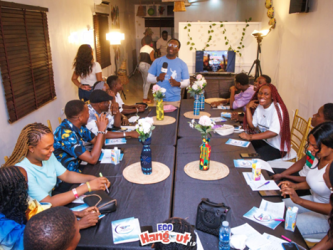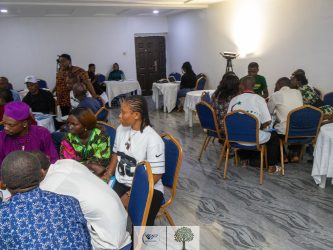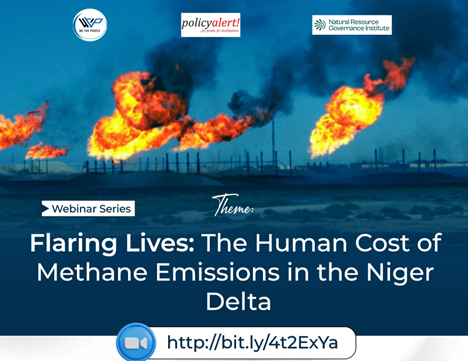
On Thursday, 26 March 2026, We the People, in collaboration with Policy Alert and with support from the Natural Resource Governance Institute, convened a webinar titled “Flaring Lives: The Human Cost of Methane Emissions in the Niger Delta.” The event brought together over 90 participants, including civil society actors, policy experts, environmental advocates, and concerned citizens, to examine the growing threat of methane emissions in Nigeria’s oil-producing regions.
Oil and gas extraction in the Niger Delta remains central to Nigeria’s economic stability, contributing approximately 65% of government revenue and over 85% of export earnings. However, this economic reliance continues to come at a significant cost to the environment and the health of communities living in close proximity to extraction sites.
A major concern highlighted during the webinar was methane, a highly potent greenhouse gas released through gas flaring, venting, leaks, and equipment failures. Though largely invisible and often overlooked, methane poses serious health risks, including respiratory illnesses such as asthma, chronic lung diseases, and cardiovascular complications. Additionally, methane is a powerful driver of climate change, with the capacity to trap more than 80 times as much heat as carbon dioxide over a 20-year period.
Despite these risks, participants noted that policy responses to methane emissions in Nigeria remain inconsistent and weakly enforced, with regulatory gaps, inadequate monitoring, and limited transparency allowing emissions to persist at alarming levels.
A key highlight of the webinar was the screening of the short documentary “Flaring Lives,” produced by We the People and Policy Alert The documentary presents a compelling account of the lived realities of communities in the Niger Delta, framing methane emissions not just as an environmental issue, but as a critical public health and environmental justice concern.
Leading the policy discussion, Mr. Edidion Dickson of Policy Alert emphasized how weak regulatory frameworks and poor enforcement have enabled the continued release of methane across oil-producing regions. He noted that beyond its severe health implications which include cancer and respiratory diseases, methane emissions also represent a major economic loss to Nigeria, amounting to billions of dollars annually.
Providing a community-centered perspective, Patricia Barileloo of the Lekeh Development Foundation highlighted the lived experiences of indigenous populations residing near gas flare sites. She described the devastating consequences of prolonged exposure, including severe illnesses, birth defects, reduced agricultural productivity, acid rain, and cases of vision impairment. She stressed that these impacts are worsening as methane emissions from gas flaring continue unabated.
Moderating the session, Ken Henshaw, Executive Director of We the People, underscored the broader climate implications of methane emissions. He described methane as one of the most potent greenhouse gases driving climate change and outlined its far-reaching impacts in Nigeria, particularly in the Niger Delta. These include increased flooding, salinization of water sources, forced migration, and the loss of livelihoods for vulnerable communities.
The webinar concluded with a strong call to action for the Federal Government of Nigeria to strengthen and enforce regulations on methane emissions, improve monitoring and transparency within the oil and gas sector and prioritize the health and wellbeing of affected communities
Participants emphasized that addressing methane emissions must go beyond economic considerations and be treated as an urgent issue of public health, environmental protection, and social justice.