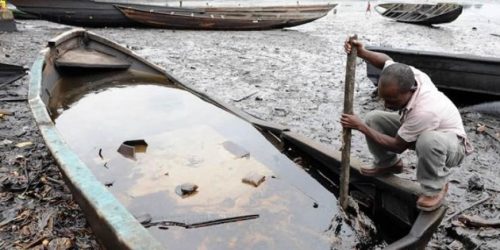
The People’s Environmental Assembly brought together activists, communities, academics and traditional rulers from the states of the Niger Delta to evaluate the state of the Niger Delta 70 years after the start of hydrocarbon extraction. The Assembly also provided space to articulate the various challenges associated with ecological damage caused by oil and gas extraction as well as the now prominent impacts of climate change, especially how they manifest in health challenges, poverty, loss of livelihoods, loss of cultural identity, conflict and social disorders.
After intense deliberations, the Assembly reflected that the Niger Delta stands out as one of the most underdeveloped regions in the world, and ranks among the most polluted areas globally. Thousands of kilometers of pipelines owned by transnational oil companies routinely rupture, leading to numerous oil spills which have led to environmental degradation, economic stagnation, and health issues for the residents of the region. Among the numerous negative indicators include the fact that life expectancy in the region is much lower than the national average, standing at only 41 years. People who live in the Niger Delta are far more likely to have respiratory illnesses and cancer than people who live elsewhere in the country. Women of the Niger Delta are more likely to have miscarriages and give birth to deformed babies. Residents of the Niger Delta are dangerously exposed to ingesting poisonous hydrocarbons from their water sources and agricultural produce. These dangerous impacts are direct results of 70 years of routine gas flaring from 178 points across the Niger Delta by oil companies, as well as the spilling of an average of 240,000 barrels of crude oil in the regions every year. The Niger Delta and its 40 million inhabitants have endured these impacts of crude oil and gas extraction for over 70 years. In that period, the people have consistently demanded justice and the protection of their right to live in an environment free from the terror of pollution, deprivation and death. Unfortunately, the response of the Nigeria government to these demands for justice have often been to side with oil companies at the expense of its people. We see examples of this in Umuechem and Ogoni where the peaceful expression of disaffection by the people was met with repression by Nigerian security forces, often with the collaboration of oil companies.
The Assembly also noted that despite the well-known, well documented and verified negative impacts brought on the people and their environment, oil companies such as Shell, Exxon-Mobil, Eni, Total Energies, and Chevron have seldom been held to account for the devastation inflicted upon the region. The oil industry in Nigeria operates as an illicit partnership between the Nigeria state and multinational oil companies, a relationship that began with the repressive force of British colonialism, and continues to be carried on by successive administrations in Nigeria, military or civilian.
The Assembly also noted that from the start, the extraction of crude oil and gas from the lands and rivers of the Niger Delta was an imposition. At no time was the consent of the people sought, and at no time were the people consulted on equal terms as natural owners of the territories where crude oil and gas were found.
The Assembly observed that rather than remediate the impacts of their extraction, these companies have gone ahead to spin campaigns of calumny against the very same people they have violated. In consistent barrages of disinformation, oil companies have turned around to blame the victims who suffer the impacts of their ecocide for being responsible for the same damage. Riding on this fraudulent spin, multinational oil companies have all transferred their toxic assets to questionable ‘indigenous’ companies, some of which they established and funded, who have continued with the same legacy of pollution and abuses.
By ‘divesting’ their assets, oil companies hope to escape the rising tide of demands for responsibility and accountability for the ecocide they have committed.
The Assembly expressed concern that the negative impacts of hydrocarbon extraction in the Niger Delta have been intensified by climate change. Since at least 2012, communities have grappled with floods that overwhelm extensive areas, leading to alarming consequences. Every other year, communities are submerged, farms are flooded, properties are destroyed, buildings are swept away, people are displaced and lives are lost. The floods resulting from climate change have undeniably placed the people under significant pressure, causing disruptions and negative impacts that cannot be ignored. During the floods, communities affected, primarily consisting of fishers and farmers, are forced to abandon their sources of livelihood and face months without income. This increased pressure has significantly threatened food security in the Niger Delta, greatly reducing the ability of the people to support themselves while also contributing to a troubling rise in inequality, poverty, insecurity, and forced migration.
Other climate stressors including the decline of soil fertility due to salinization, the loss of land from sea encroachment, extreme heat, unpredictable rainfall patterns affecting seasonal agriculture, and the rising number of climate migrants are increasing the pressure on the people of the region.
The Assembly expressed deep concern and disappointment that the situation in the Niger Delta occasioned by reckless extraction and climate change have scarcely made it into national or global policy conversations. While the world mouths commitment to a just transition, it abandons communities like the Niger Delta who have carried the heaviest weight of the fossil era. Fossil companies continue to make record profits from extraction while communities suffer the impacts. There are no serious conversations on making fossil companies pay for the damages they have causes.
Based on the forgoing, the Peoples Environmental Assembly makes the following demands;
- All divestment plans by multinational oil companies, whether approved or applied for should be immediately halted. This should be followed by an immediate and thorough assessment of the ecological, health and social damage caused by the activities of oil companies in the Niger Delta. This assessment should be conducted by an independent international body of experts working with national and international civil society organizations.
- Immediately halt the plan to resume oil extraction in Ogoniland, a place where a hydrocarbon pollution cleanup exercise has already commenced.
- Commence an immediate review of the Petroleum Industry Act to remove all offensive clauses that pass the blame for oil spills to communities, and empowers oil companies to continue the flaring of gas in communities.
- The government must immediately produce an actionable plan in response to the floods. This plan must include frameworks for relocating affected communities, and supporting them to recover from the effects of the floods. These plans must be backed by appropriate fiscal releases.
The Assembly also adopted the following resolutions;
- To create a global network of solidarity to connect victims of fossil company atrocities all over the world, as well as organizations campaigning for accountability and ecological justice.
- In furtherance of the network, exchange visits will be organized between various communities across the world where oil companies are causing harm.
- To purposefully engineer the training and emergence of a new crop of ecological rights activists to join the ranks of campaigners.
- To work towards mobilizing and initiating litigations domestically and internationally to ensure that oil and gas companies are compelled to remediate the harms they have caused