Communities affected by decades of mining activities in Cross River State have renewed calls for accountability, environmental justice, and greater participation in decisions affecting their lands and livelihoods.
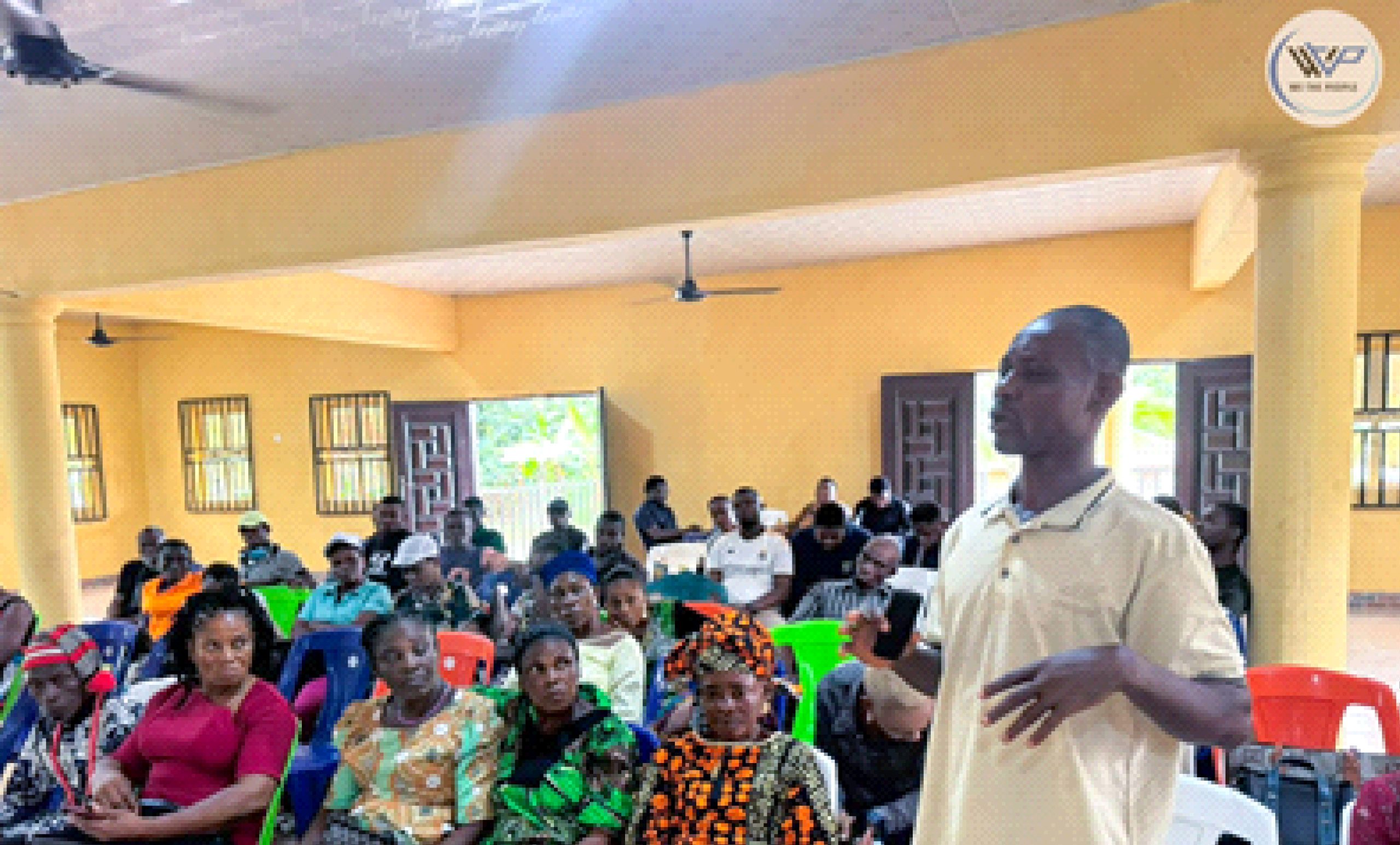
On Tuesday, June 9, 2026, We the People convened a one-day community dialogue in Mbobui Community, Akamkpa Local Government Area, under the theme “Mining, Livelihoods, Environment and Community Participation.” The dialogue brought together traditional rulers, women leaders, youth representatives, civil society organisations, and the media from five mining host communities participating in the Strengthening Women in Mining (SWIM) project—Mfamosing, Abiati, Akwa Ikot Effanga, Akansoko, and the host community, Mbobui.
The dialogue provided a platform for affected communities to share their experiences, reflect on years of environmental and social impacts of mining operations, review advocacy tools, and strengthen collective efforts towards accountability and sustainable community development.
In his presentation, Mr. Mfon Gabriel of Policy Alert presented findings from the “Wetin We Gain?” research conducted in mining host communities.
The presentation highlighted persistent concerns including the absence of a Community Development Agreement between mining companies and host communities, poor community engagement, weak accountability, environmental degradation resulting from mining activities, health concerns linked to dust pollution, violations of land and rent agreements, and limited benefits accruing to communities despite years of mineral extraction.
Providing an update on the Strengthening Women in Mining (SWIM) project, We the People’s Project Officer for Mining and Forestry, Nsikak Peter Udofot, reflected on the journey of the Mining Justice Campaign and the progress made so far. He explained that the project seeks to strengthen community participation in mining governance while empowering women to take leadership roles in advocacy. He also acknowledged the project’s successes and challenges and noted that future interventions would deliberately incorporate men alongside women to build stronger community ownership.
The dialogue featured an open and interactive session during which participants openly discussed the realities of living in mining host communities. Across the five communities, participants identified a range of common challenges, including health challenges, water and air pollution, forced displacement, loss of biodiversity and traditional livelihoods, etc. Several participants shared personal experiences of the environmental changes witnessed over the years.
Addressing participants, the Executive Director of We the People, Ken Henshaw, stressed that communities should be empowered with information before negotiating benefits from companies operating on their lands. He argued that meaningful negotiations can only occur when communities understand the true economic value of the minerals extracted from their territories and are able to hold companies accountable for their obligations.
The dialogue reaffirmed the determination of mining host communities to organise, amplify their voices, and pursue justice for the environmental, social, and economic impacts they have endured over decades of mineral extraction.