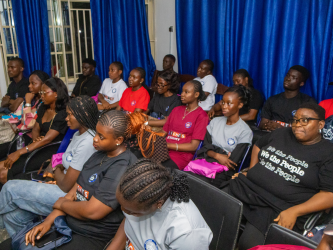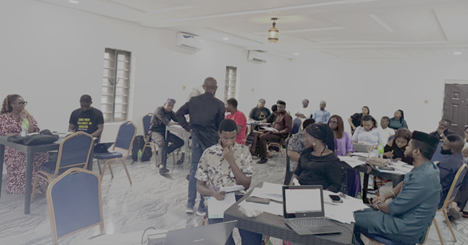
On February 27, 2026, We the People carried out the second in a series of strategic meetings in Calabar aimed at developing a state Youth Policy. The workshop aimed at giving young leaders and stakeholders from Cross River State the framework to deliberate on the key issues confronting young people in the state, and articulate ideas for ensuring that they are included in policy and governance, as well as creating economic and social opportunities for young people to thrive.
Available data indicates that almost 70% of the people in Cross River State, like the rest of Nigeria, are young. Different administrations in the state have no doubt undertaken various programs to help young people fit into society and the economy, but the outcomes haven’t been particularly successful. Many young people are still out of work, underemployed, or unable to find work. They also have a hard time accessing and enjoying basic rights and are often excluded from policy and governance processes.
The workshop brought together over 40 young leaders, civil society actors, student leaders, development practitioners, and other stakeholders working at the intersection of youth inclusion and governance in Cross River State. More specifically, the workshop was framed around the idea of transitioning youths in the state beyond their narrow perception as a statistical demography, and rather strategically positioning them as major drivers of development at the state and national levels.
In his keynote, Ken Henshaw, Executive Director of We the People highlighted the outcomes of the first workshop which held in Calabar in November 2025, stressing that bringing together young people from diverse sectors to co-create a policy document of global relevance is both timely and transformative. He also stated that government policies have often failed to prioritize issues that addresses the concerns of youths, preferring rather to keep young people marginalized and excluded. Referencing the Nigeria #EndSARS movement of 2020 as a clear show of the resilience of young people when they collectively mobilize around a cause. Speaking on the role of young people in politics and policy development, he stated that despite the achievement of lowering the basic age of contest into electoral offices as evidenced in the success of the Not Too Young To Run campaign, the participation of young people continues to be limited by other systemic factors including the lack of financial resources and deliberate exclusion.
The workshop provided participants with a discussion paper containing critical areas of policy interest including access to quality and inclusive education, health services, frameworks for social inclusion, empowerment initiatives and other cross cutting issues like environment, inclusion of gender considerations and the inclusion of people living with disabilities in policy priorities.
The workshop came to a conclusion with a shared decision to establish a continuous engagement platform to finalize the draft policy document which will serve as a youth-developed and youth-focused framework for government action to ensure that youth voices remain central to governance and development priorities in Cross River State.