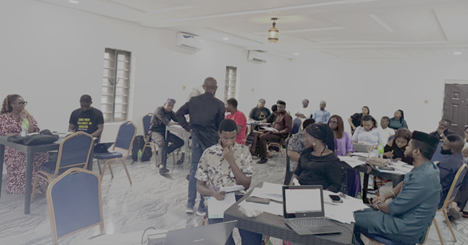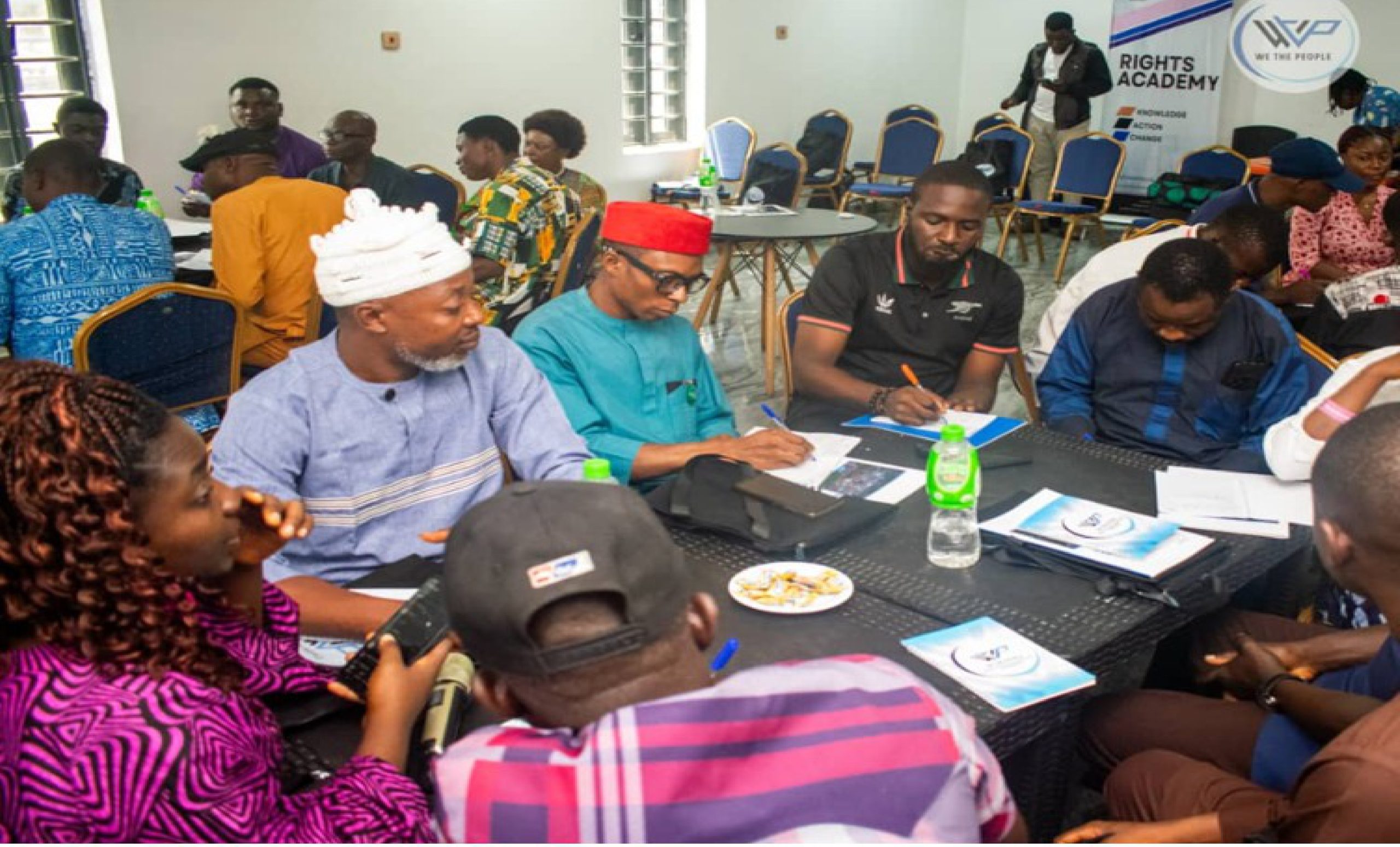
On Thursday, 20th November 2025, We the People conducted a one–day training workshop for forest community members in Calabar, Cross River State. Forests in Cross River State have long been a source of life, culture, and livelihood for indigenous communities. However, increasing deforestation driven by commercial agriculture, logging, and mining have threatened these forests and the people who depend on them. At the same time, changes in land ownership laws have weakened community control over their lands, leaving many forest host communities marginalized in decisions about their environment and future. In response to these realities, We the People organized a one–day training workshop for forest community members in Cross River State to deepen their understanding of forest governance, land rights, and strategies for resisting deforestation and exclusion. Participants included village heads, paramount rulers, community women, and youths from different forest host communities in the state.
The workshop opened with Ukeme Ekong, program staff at We the People, welcoming participants to the workshop. She explained the purpose of the training and what communities hope to achieve with it, while highlighting previous and ongoing forest protection efforts by We the People. During her presentation, she took participants down memory lane, describing the previous state of forests in Cross River State and comparing it to the present reality of forest loss. She also drew attention to the growing threats facing the forests today and stressed why it is urgent to address deforestation.
In his presentation, Clement Oko, Executive Director of Biodiversity Rescue Club, taught participants on the importance of forests and how they function. He described the forest as a community made up of trees and other life forms, and emphasized that forests are a source of life for humans. He stated that “for our realities to continue, every specie must thrive.” He explained that forests are vital for the health of the planet, acting as the lungs of the earth by absorbing carbon dioxide and releasing oxygen. He further noted that forests help filter water bodies and serve as a natural pharmacy for communities, providing plants and herbs that have supported people for generations. According to him, degrading the forest destroys a natural health infrastructure that thousands of people depend on
The second training session was led by the Executive Director of We the People, Ken Henshaw, on the topic “Forest Ownership and Community Rights in Cross River State.” He began by noting that land is not only an economic resource, but is also cultural and in many communities, a source of power.
He explained that in precolonial times, land was owned communally, not individually. Land was held in trust by the community and managed for families and future generations, and was never viewed as private property in the way it is often seen today. He went on to explain how land ownership in Nigeria moved from community control to being ceded to the British government. Ken pointed out that Nigeria’s Land Use Act of 1978 is derived from these colonial–era laws and was never redesigned to protect the interests of independent Nigeria and its communities. He stressed that “our communal ownership allowed us to treat nature and forest as part of us.”
The third session was facilitated by We the People’s Officer on Forest and Mining, Mr. Peter Nsikak. He enlightened participants on the major threats to forests, focusing on deforestation and its drivers. Peter identified agricultural expansion and commercial agriculture as major causes of deforestation in Cross River State. He also noted that mining activities and other extractive ventures are contributing to forest loss and land degradation in many communities.
Towards the end of the workshop, participants suggested that they will bring the training closer to their communities and that information shared at the workshop would make even more impact if the sessions are domesticated and held directly in the communities where people are facing these challenges every day.
The training came to a close with a renewed pledge by community representatives to A press conference with a reputable media outfit and network of all host forest communities is planned to call attention to what is happening in our forest and Conduct follow-up step-down trainings in communities.