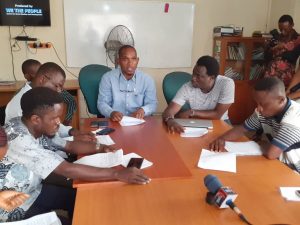
To commemorate World Environment Day 2026, We the People on June 5, 2026 convened a documentary screening and community dialogue to draw attention to the devastating impacts of gas flaring and methane emissions on communities across the Niger Delta.
The event, themed “Flaring Lives: The Human Cost of Gas Flaring and Methane Emissions in the Niger Delta,” brought together representatives of gas flare-impacted communities, civil society organisations, environmental advocates, researchers, media practitioners, and members of the public to reflect on the environmental, health, and socioeconomic consequences of decades of routine gas flaring and to strengthen calls for accountability
Opening the event, the Executive Director of We the People, Ken Henshaw, highlighted the profound human cost of gas flaring, noting that communities living near flare sites continue to bear the burden of pollution despite decades of promises to end the practice. He explained that prolonged exposure to gas flaring has been linked to respiratory illnesses, skin and eye conditions, and other health concerns, while contamination of air, land, and water continues to undermine farming, fishing, and other traditional livelihoods.
Ken also criticized the repeated postponement of government deadlines to eliminate routine gas flaring, describing the continued extensions as evidence of weak regulatory enforcement and inadequate political commitment to protecting affected communities. He stressed that while oil and gas extraction has generated enormous wealth, the communities hosting these operations continue to pay the price through deteriorating health, environmental degradation, and declining economic opportunities.
A major highlight of the event was the screening of Flaring Lives: The Human Cost of Methane Emissions in the Niger Delta, a documentary produced by We the People that documents the lived experiences of people residing in gas flare-impacted communities. Through compelling testimonies and on-the-ground footage, the film illustrates how decades of routine gas flaring have transformed local environments and affected the wellbeing of thousands of families across the region.
The documentary was followed by an interactive community dialogue that provided participants with an opportunity to reflect on the issues raised in the film and share experiences from their own communities.
Representatives from gas flare-impacted communities spoke candidly about the realities of living under continuous gas flaring. Participants described recurring illnesses, deteriorating environmental conditions, shrinking livelihoods, and the gradual erosion of social and economic systems that have traditionally sustained their communities.
The discussions also highlighted the broader implications of gas flaring beyond environmental pollution. Participants noted that the loss of productive land and water resources threatens cultural heritage, community resilience, and the ability of future generations to sustain themselves within their ancestral communities.
The event concluded with a unified call for decisive action to address the longstanding impacts of gas flaring in the Niger Delta. Participants demanded an immediate end to routine gas flaring, comprehensive environmental and health remediation for affected communities, publicly accessible gas flaring data, meaningful participation of host communities through the principle of Free, Prior and Informed Consent (FPIC), and stronger accountability measures for operators responsible for environmental harm.