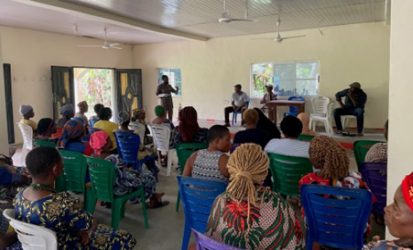
On the 23rd of September, We the People partnered Tipping Point, Bertha Foundation, War on Want, the People’s Health Tribunal, and Climate Reparations to host a webinar titled “Stop Shell, Reparations for the Niger Delta. The event centered on holding Shell accountable for decades of environmental devastation and degradation in Nigeria’s Niger Delta, dating back to the company’s initial operations since the 1950s. The webinar attracted a global audience, especially communities and individuals who have been exposed to Shell’s negative climate and environment impacts
In his speech, environmentalist and the Executive Director of Health of Mother Earth Foundation, Nnimmo Bassey provided detailed historical overview of oil extraction in Nigeria, from Shell’s first oil well in Otuabagi, Bayelsa State, in 1956. He emphasized the long-standing issues of environmental degradation, citing examples of oil spills that have remained unaddressed for decades. Bassey highlighted how Shell, like other oil companies, has often shirked its cleanup responsibilities. Specifically, he mentioned the Otuabagi oilwells, which Shell claimed to have decommissioned, yet crude oil continues to flow from them, polluting rivers and farmlands in nearby indigenous communities. He underscored the long-term costs of hydrocarbon extraction on the people and ecosystems of the Niger Delta, referencing critical reports such as the UNEP report on Ogoniland, the Bayelsa State Environment Commission report, and the Otuabagi report by Kebetkache Women Development and Resource Centre. These reports all signal alarming levels of hydrocarbon pollution and the ongoing poisoning of local communities.
Ken Henshaw, 2024 Bertha Challenge Fellow, followed with a compelling exposé on the deceptive practices of oil companies, particularly in the context of Shell’s divestment from the Niger Delta. Henshaw debunked claims that Shell’s withdrawal was due to unprofitable operations. He argued that the company is retreating because communities in the Niger Delta have become increasingly aware of the environmental atrocities committed in their region, and Shell is seeking to evade accountability for decades of ecocide. He further revealed troubling details about Shell’s supposed divestment to a consortium called Renaissance Energy, which was formed only two years ago. Henshaw disclosed that Renaissance’s shareholders are mostly former Shell employees, and Shell has even extended loans to the consortium to purchase its own assets. These actions, according to Henshaw, are clear evidence that Shell is acting in bad faith, attempting to cloak its continued involvement in the region and dodge its responsibility to the Niger Delta’s communities.
Henshaw also demanded that true justice for the people of the Niger Delta must include a comprehensive environmental and health audit of the damage caused by decades of oil extraction. He emphasized that this must be followed by thorough restorative actions to rehabilitate the environment and to address the harm inflicted on the region and its people by Shell and other oil companies.
The webinar issued a global call to action. Solidarity partners based in the United Kingdom were encouraged to write to their members of Parliament urging them to halt Shell’s divestment in Nigeria until reparations are made to oil devastated Niger Delta communities. Activists from Nigeria were urged to write to their senators and other public officials demanding that the government takes action against Shell’s divestment and push for reparative justice for the people of the Niger Delta.
Participants also collectively agreed to support the upcoming litigation against Shell in the UK.